
The last conversation between the two leaders was on April 4 on the issue of hydroxychloroquine.

Scotching speculation about early polls, External Affairs Minister Pranab Mukherjee has made it clear that the survival of the government was more important than the Indo-US nuclear deal and the Left parties will have to be taken on board. He ruled out the possibility of a minority government signing the nuclear agreement, saying the US was not ready for it.

Making nuclear exemptions for India, says Senator Edward Markey, 'only infuriates Pakistan and leads them to further increase their own nuclear capacities.'
After two hours of deliberations between the United Progressive Alliance and the Left parties, it was decided that they would meet again on October 5 to narrow down their differences over the Indo-US nuclear deal
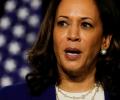
The selection of a woman Senator with an Indian background as the Democratic party's vice-presidential nominee should normally be a matter of elation in India, especially for those who boast of their nationalistic credentials such as the BJP followers, notes Amulya Ganguli.

Thimpu apparently didn't think it necessary to take Delhi into confidence. Bhutan is loathe to getting dragged into the geopolitical rivalry between India and China. And for Beijing, this was too good an opportunity to be missed to thumb its nose at the powers-that-be in Delhi, points out Ambassador M K Bhadrakumar.
CPM general-secretary Prakash Karat had said that the government would have to face serious consequences if it went ahead with the nuclear deal.
The main opposition Bharatiya Janata Party has already rejected the deal and sought a joint parliamentary committee to go into it after which parliamentary approval is necessary to operationalise the deal.
The US will join India in seeking to negotiate with the International Atomic Energy Agency an India-specific fuel supply agreement.
"Iran and India enjoys close friendly relations," the spokesman was quoted in Tehran Times as saying.
The winter session of Parliament beginning Thursday will see sparks fly with a range of issues from Nandigram violence and the stalled India-United States nuclear agreement to problems faced by farmers and wheat imports providing the ammunition for rival parties. The Nandigram issue is expected to make the three-week session of Lok Sabha and the Rajya Sabha a stormy affair and may push the nuclear deal to the back seat amid signs of a thaw between UPA and the Left.
Burns was speaking at a White House Diwali function.
Officials of India and the US on Wednesday held discussions on ways to meet the global challenges of nuclear proliferation and threat of nuclear terrorism.
Mulford said very little about the meeting except that it was regarding the civil nuclear deal during which he explained his country's position to Sinha, a key person in the BJP.

Prime Minister Narendra Modi has favoured broadening of the strategic partnership with Russia in nuclear, defence and energy sectors and invited President Vladimir Putin to visit Kudankulam atomic power project during his trip in December for his annual summit.
India and Pakistan on Monday exchanged lists of their nuclear installations and facilities covered under an agreement of 1998.
Minister of State for External Affairs Anand Sharma, who is traveling with Prime Minister Manmohan Singh for the India-Brazil and South Africa summit at Johannesburg, said India must be part of a global nuclear system.

Juster played a key role in the landmark Indo-US civil nuclear deal.
Besides the implications of the Hyde Act, the 15-member panel will also discuss the implications of the deal on foreign policy and security cooperation.
Burns and other senior administration officials had hoped that the negotiations over the 123 Agreement last month in New Delhi would resolve any pending issues so it could be sent up to Congress for review.
Dr Singh must really attain the 'historic' by being the first Indian PM to author a public document refuting every criticism against his biggest policy yet.
External Affairs Minister Pranab Mukherjee said that there are many "extraneous and prescriptive" provisions in the Hyde Act, which are "not acceptable" to India.

The Congress will take on the government in Parliament on the Indo-US nuclear deal

What goes behind the scenes for an American President's visit?

India cannot choose its geography and devise regional strategies to dovetail into the Western Indian Ocean hypothesis conceived in the Pentagon, argues Ambassador M K Bhadrakumar.

A top Obama administration official on Thursday said that though some progress is being made in the implementation of the Indo-US civilian nuclear deal, it is going to be a long and tough road to work through the issues related to India's nuclear liability law.
Maintaining that both India and the US are seriously trying to sort out the 'outstanding issues', he, however, refused to specify when the agreement will be firmed up.

India has welcomed the election of Hassan Rouhani as the new president of Iran, saying the poll outcome is a "good signal" indicating greater convergence and consensus among Iranian people.
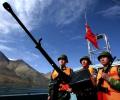
Both the Indian and Chinese armies have brought in more troops in sensitive locations like Demchok, Daulat Beg Oldie and areas around Galwan river as well as Pangong Tso lake in Ladakh, the sources said. The area around Galwan has been a point of friction between the two sides for over six decades.
Meetings with nuclear scientists likely.

A first look of the Foreign Secretary's meeting with Rice.
ITER is the experimental step between the latest studies of plasma physics and future electricity-producing fusion power plants.
Amidst a walkout by the Left parties, government on Thursday asserted in the Lok Sabha that it had the sovereign right to conduct a nuclear test, making it clear that the bilateral agreement with the US does not put any restraint on it.
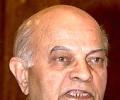
India's first NSA Brajesh Mishra's combination of hard-headed realism and outspokenness ensured that he always spoke up for India -- not necessarily for the BJP, notes Jyoti Malhotra.

'If one puts the context of what Xi Jinping said at the UN about not wanting a 'hot or cold war with any country', one realises that his speech was quite bizarre.' 'The world does not expect such statements from China, a nation aspiring to be a superpower.

Foreign Secretary F Jaishankar rushed to Seoul ahead of the crucial plenary meet even as China said that India's bid was not on the agenda.

